
# A decade after its release, we dive back into Los Santos. Is GTA V still worth playing in 2025? Our in-depth review covers graphics, gameplay, story, and GTA Online.
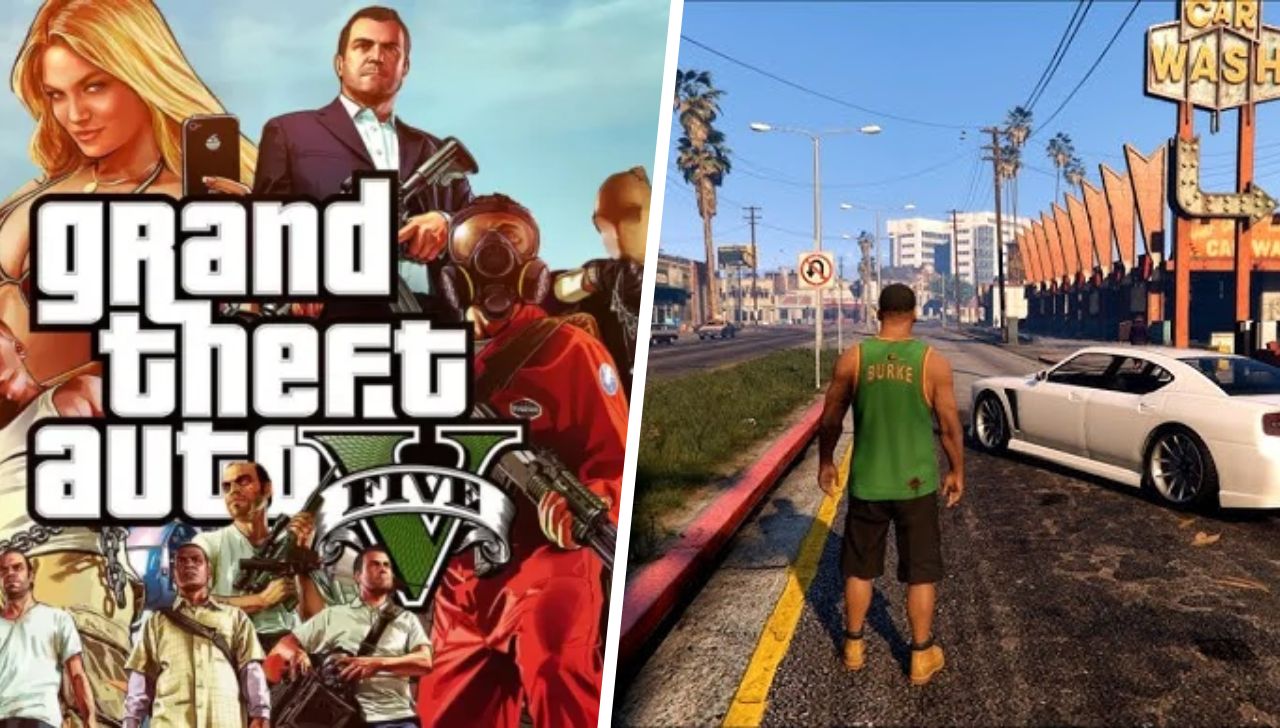
Geminvo – It’s a titan, a monolith of modern entertainment that defies superlatives. Grand Theft Auto V, the magnum opus from Rockstar Games, has sold over 190 million copies, generated billions in revenue, and spanned three distinct console generations since its 2013 debut. It’s a cultural phenomenon that has outlasted countless trends, technologies, and even its own developer’s subsequent masterpieces. For many, the sun-soaked streets of Los Santos are as familiar as their own hometown.
But a decade is an eternity in the video game industry. We’ve seen new hardware, new design philosophies, and new benchmarks for what an open world can be. This raises the central question, the one that echoes in forums and search bars: After more than ten years, is GTA V still worth playing in 2025? Does the sprawling metropolis of Los Santos still shine with the brilliance that captivated the world, or has its luster finally faded under the harsh light of modern expectations?
The answer is not a simple yes or no. While certain gameplay mechanics and technical aspects undeniably show their age, GTA V’s masterful world-building, sharp satire, and the ever-evolving beast of GTA Online allow it to remain a uniquely compelling and relevant experience, even in a post-RDR2 world. To find out if a return trip to San Andreas is right for you, this comprehensive review will dissect the game’s four key pillars from a 2025 perspective: its visuals, its core gameplay, its story, and its untamable online counterpart.
Read More : The 15 Best Open-World Games to Play While Waiting for GTA VI (2025)
The Visuals: A Postcard from 2013 in a Ray-Traced World?
The latest iteration of the game, Grand Theft Auto V: Expanded & Enhanced, arrived for PC, PlayStation 5, and Xbox Series X|S in 2025, promising a significant visual overhaul. This update brought the game into the modern era with a suite of new technologies: ray-traced shadows and reflections, support for upscaling technologies like NVIDIA DLSS and AMD FSR, and drastically faster loading times thanks to the universal adoption of solid-state drives.
On consoles, players are offered a choice of graphical modes, a standard for contemporary releases. As detailed by technical analyses from outlets like Digital Foundry, these modes offer a trade-off between resolution and performance. “Fidelity Mode” delivers a native 4K resolution with ray tracing enabled but is locked at 30 frames per second.
“Performance RT” offers a dynamic 1440p resolution with ray tracing at a much smoother 60 fps, while a standard “Performance Mode” removes ray tracing to maintain a more stable 60 fps lock. For most players, Performance RT has become the recommended way to play, offering a good balance of modern visual flair and responsive gameplay, with the PS5 version often holding a slight performance edge in particularly demanding scenes.
However, the most significant leap came with a later PC update that introduced a far more advanced form of ray tracing: per-pixel ray-traced global illumination (RTGI). This isn’t just a simple upgrade; it’s a fundamental change to the way the game’s world is lit. Unlike the console versions’ more limited implementation, the PC’s RTGI allows light to bounce realistically off surfaces, illuminating dark corners and creating a much softer, more natural, and cohesive look.
It applies to all light sources, from the midday sun to the flashing headlights of a passing car, dramatically altering the mood of Los Santos for the better. The sheer complexity of this lighting system, running efficiently on mainstream hardware like an RTX 4060, suggests it’s more than just a patch for an old game. It appears Rockstar is using the PC version of GTA V as a public testbed for the advanced lighting technology being developed for Grand Theft Auto VI, offering a tantalizing preview of the visual fidelity we can expect in Vice City.
Despite these impressive lighting enhancements, the game cannot fully escape its 2013 origins. The underlying geometry of the world and the fidelity of its character models are still rooted in PlayStation 3 and Xbox 360 technology. While the art direction remains strong, character faces can look plasticky and lack the nuanced detail of modern titles. Textures, though improved, can’t compete with the crispness of a game built from the ground up for 4K displays. This creates a visual dissonance: a world with stunning, next-generation lighting populated by characters and objects that clearly belong to a previous era. It’s a beautiful postcard, but one whose edges are noticeably frayed with age.
Read More : Review God of War Chains of Olympus (2008) – A Look Back at Kratos’s Masterful Handheld Debut
Solid Foundation or Archaic Design?
Beyond the visuals, the moment-to-moment feel of a game is what determines its staying power. Here, GTA V presents a mixed bag of timeless fun and frustratingly dated design. The core game mechanics are a clear product of their time, and how a player feels about them in 2025 will largely depend on their tolerance for a pre-modern control scheme.
Driving Physics: Arcade Fun vs. Grounded Realism
The driving in Grand Theft Auto V is, for many, the star of the show. It strikes a satisfying balance, blending the weighty, simulation-style physics of GTA IV with the more accessible, arcade-like handling of Rockstar’s Midnight Club series. Cars feel distinct, with a tangible sense of weight and momentum that makes weaving through traffic a joy, especially with the nuanced feedback of a controller. This was a deliberate and intelligent design choice. Faced with the sprawling map of San Andreas, the developers opted for a model that prioritized fun and accessibility over the punishing realism of GTA IV, which many players found “boaty” and difficult to master.
A decade later, this model largely holds up. It’s immediately fun and empowers the player to pull off cinematic car chases with ease. However, when compared to modern racing games or even the grounded, immersive feel of riding a horse in Red Dead Redemption 2, the simplicity becomes apparent. The physics can feel overly forgiving, and the damage model is noticeably less complex than its predecessor’s, leading to a driving experience that, while entertaining, lacks the depth and emergent challenge that define more contemporary titles.
Gunplay and Cover: The Achilles’ Heel of Los Santos
If driving is the game’s strength, its third-person shooting is its most glaring weakness. The gunplay in GTA V feels undeniably clunky and dated in 2025. Movement feels heavy and lethargic, and aiming without the generous auto-aim is a stiff and unsatisfying experience. This is a system built for a different era of gaming, one that predates the fluid, responsive controls that have become standard in titles like The Division or even Rockstar‘s own later works, Max Payne 3 and Red Dead Redemption 2.
The cover system, a staple of third-person shooters, is functional but often unreliable. Players will frequently find their character snapping to the wrong piece of cover or getting stuck in an animation at a critical moment. The absence of basic quality-of-life features, like a dedicated crouch button for use outside of stealth mode, is particularly jarring for anyone accustomed to modern shooter design.
These issues stem from design choices made to accommodate the limitations of 2013 hardware. The mechanics were “good enough” for a single-player adventure on the Xbox 360, where narrative and world exploration were paramount. However, these same systems have become a persistent source of frustration in the highly competitive, action-oriented environment of modern GTA Online, where precision and fluid movement are key. The foundation that was solid enough for a 2013 story mode has proven too rigid to support a decade of evolution into a global online shooter.
The Character-Switching Mechanic: Still a Stroke of Genius
In stark contrast to the aging gunplay, GTA V’s character-switching mechanic remains a brilliant and innovative feature that feels just as fresh today as it did at launch. The ability to seamlessly swap between Michael De Santa, Franklin Clinton, and Trevor Philips at almost any time is a masterstroke of design that elegantly solves multiple problems at once.
Narratively, it allows for complex, multi-layered missions where the player can experience an event from three different perspectives, such as the iconic FIB building heist where Michael rappels down the skyscraper while Franklin provides sniper cover. From a gameplay perspective, it serves as an ingenious form of fast travel, eliminating the tedium of long drives across the massive map; if you’re stuck in the deserts of Blaine County, you can simply switch to Franklin and find yourself back in the heart of the city.
Most impressively, the mechanic enhances the game’s sense of a living, breathing world. When you switch away from a character, they don’t simply vanish; they go about their day. Switching back might find Michael in an argument with his wife, Franklin walking his dog, or Trevor waking up drunk on a beach in his underwear. This creates a powerful illusion of persistence, making the protagonists feel like real people with lives that continue even when the player isn’t in control. The fact that this feature has been so rarely imitated speaks to its technical and narrative complexity, cementing it as one of GTA V’s most unique and enduring triumphs.
Read More : The 10 Scariest and Most Effective Horror Games on the PS5..
The Story & Satire: More Relevant Than Ever?
While gameplay mechanics can age, a great story and sharp commentary can be timeless. Grand Theft Auto V’s single-player campaign is a sprawling crime epic that not only holds up but, in many ways, has become more potent and resonant over the last decade.
The Trio of Chaos: Do Michael, Franklin, and Trevor Still Resonate?
The narrative genius of GTA V lies in its abandonment of the traditional “rags to riches” formula in favor of three established, deeply flawed protagonists whose lives violently intersect.
- Michael De Santa is the embodiment of the hollow American Dream. He’s a retired bank robber living in a Rockford Hills mansion with a family that despises him, drowning his existential dread in whiskey and old Vinewood movies. His mid-life crisis and desperate attempt to recapture the thrill of his past feel painfully real in a modern culture obsessed with the appearance of success while often ignoring the internal emptiness it can create.
- Franklin Clinton represents the modern striver. A young, ambitious gangbanger from the hood, he’s desperate to escape his circumstances and make something of himself. His journey forces him to navigate the treacherous path between loyalty to his old friends, like Lamar, and the allure of a bigger score offered by his new mentor, Michael. His story, which continues in GTA Online’s “The Contract” DLC, is a compelling look at the price of ambition in a world of limited opportunities.
- Trevor Philips is the chaotic, unpredictable id of the trio. A meth-dealing, psychopathic warlord living in a trailer, he is a force of pure, unfiltered impulse. Yet, beneath the rage and violence lies a strange and broken sense of loyalty, particularly towards Michael, the man who betrayed him. In an era of carefully curated online personas and PR-speak, Trevor’s terrifying authenticity serves as a shocking, and darkly comedic, counterpoint.
These characters are selfish, violent, and often despicable, but their motivations are deeply human, and their interactions crackle with some of the best writing in the medium. Their colliding stories create a narrative that is far more complex and emotionally layered than a simple crime story.
A Vicious Satire: Has Reality Caught Up to the Joke?
GTA V is, at its core, a ferocious work of social commentary, a “monstrous parody of modern life” that takes aim at the absurdities of Western culture. Through in-game media like the LifeInvader social network, the “Fame or Shame” reality show, and dozens of cynical radio commercials, the game masterfully satirizes everything from consumerism and celebrity worship to corrupt government agencies and corporate greed.
In 2013, this satire felt sharp and exaggerated. In 2025, it feels unnervingly prophetic. The game’s depiction of a social media company selling user data for profit, a populace obsessed with vapid influencers, and a political climate fueled by paranoia and conspiracy is no longer an exaggeration—it’s a Tuesday. Reality has, in many ways, caught up to and even surpassed the game’s parody. This creates a fascinating dynamic where the game’s satire has lost some of its shocking, humorous edge simply by becoming more accurate over time.
This presents a significant challenge for the upcoming Grand Theft Auto VI. If the world of GTA V now feels like a documentary, how can Rockstar effectively satirize the even more extreme cultural landscape of today? The old method of simple exaggeration may no longer be sufficient. The enduring relevance of GTA V’s commentary has paradoxically made its own successful formula much harder to replicate for the future. Yet, for players experiencing it today, the game remains a brilliant and biting critique of a world that looks more and more like Los Santos every day.
The Undisputed Star of the Show
More than any character or mission, the true, undisputed star of Grand Theft Auto V is the world itself. The sprawling, sun-drenched state of San Andreas, encompassing the dense urban jungle of Los Santos and the dusty, desolate plains of Blaine County, remains a monumental achievement in world design and a benchmark against which all other open world games are measured.
What makes Los Santos so special is not just its scale, but its incredible density and sense of place. This was a world meticulously crafted to feel alive, a feat made all the more impressive given it was originally built to run on the PlayStation 3 and Xbox 360. Rockstar’s proprietary RAGE engine was overhauled to handle incredible draw distances, and their mastery of Level of Detail (LOD) scaling and asset streaming created a vast, seamless world with no loading screens—a technical marvel that still impresses today.
Many modern open-world games feel like beautiful but sterile theme parks, with vast stretches of empty land separating checklists of icons and repetitive activities. Los Santos, in contrast, feels like a genuine place. Its streets are filled with ambient life; NPCs have their own routines, engage in conversations, react to the player’s presence, and often collide in unscripted, emergent ways that create a constant sense of unpredictability. A simple drive down Vinewood Boulevard can result in witnessing a police chase, a car accident, or a celebrity being hounded by paparazzi. This focus on “ambient design” over “prescriptive content” creates an immersive simulation that is engaging to simply exist in, rather than a map to be cleared.
Furthermore, the world is layered with an incredible amount of detail and secrets that reward exploration. From the eerie ghost of Jolene Cranley-Evans on Mount Gordo and the sunken UFO off the coast of Paleto Bay to the cryptic mural on Mount Chiliad that has fueled conspiracy theories for a decade, the world is packed with environmental storytelling.
While some critics rightly point out that the world lacks the sheer number of interactive interiors of GTA IV or the deep systemic reactivity of Red Dead Redemption 2, its cohesive and atmospheric design remains unparalleled. The city of Los Santos is more than a backdrop; it is a character, and it is the primary reason the game continues to feel so vital and immersive a decade later.
The GTA Online Phenomenon: The Engine of Longevity
While the single-player campaign is a preserved masterpiece, GTA Online is the ever-mutating, chaotic engine that has propelled the game’s unprecedented longevity. What began as a somewhat basic multiplayer mode has evolved into a juggernaut platform in its own right, fundamentally changing the identity of Grand Theft Auto V in the process.
From Multiplayer Mode to Juggernaut Platform
Since its rocky launch in 2013, GTA Online has received more than 40 massive content updates, transforming it into an entirely different beast. The game now offers a staggering breadth of activities. Players can orchestrate complex, multi-stage cooperative
Heists, run a criminal empire through various businesses like CEO offices, Biker clubhouses, and underground Bunkers, compete in hundreds of unique races and Adversary Modes, or simply socialize in nightclubs, arcades, and sprawling car meets.
This constant stream of new content, supported by weekly events, bonuses, and new vehicles, has maintained a massive and dedicated player count, making lobbies feel just as active in 2025 as they did years ago. Rockstar’s commitment to supporting the game is undeniable; it is a live-service behemoth that has set the standard for long-term engagement. This decade of evolution, however, has created a fundamental split. The grounded, satirical crime drama of the story mode now exists alongside an online world filled with flying rocket bikes, laser cannons, and submersible cars. In effect, Rockstar has created two very different games under one banner, and a player’s enjoyment of one is no guarantee they will enjoy the other.
The New Player Experience: Is It Too Late to Jump In?
For a newcomer, diving into GTA Online in 2025 can be an intimidating prospect. The sheer volume of content is overwhelming, and the in-game economy has inflated to astronomical levels, making high-end items feel impossibly out of reach. The game is a serious grind, a reality that can push frustrated players toward purchasing Shark Cards—the game’s microtransaction currency.
However, Rockstar has made significant strides to make the experience more welcoming. The introduction of the “Career Builder” on modern platforms gives new players a head start, providing them with a free business, vehicle, and weapons to kick-start their criminal enterprise. Furthermore, many of the newer content updates, such as the Cayo Perico Heist and the Acid Lab business, are designed to be completed solo, allowing new players to earn significant money without needing a dedicated crew.
The biggest hurdle remains the community itself. “Griefing”—the act of players using their high-powered, often futuristic vehicles to harass and kill others, particularly those trying to sell cargo—is a pervasive issue. The best advice for any new player is to make liberal use of invite-only sessions, which allow you to complete most business activities in peace without the threat of a rocket-spewing Oppressor Mk II ruining your hard work. So, is GTA Online active in 2025? Yes, incredibly so. But for newcomers, it requires patience, a willingness to follow guides, and a strategic avoidance of public lobbies until they are well-established.
The GTA+ Controversy: Pay-to-Win or Fair Value?
Further complicating the online economy is GTA+, a monthly subscription service that offers members a suite of benefits. Subscribers receive a monthly deposit of GTA$500,000, exclusive access to certain vehicles, special discounts, bonus rewards on activities, and access to a rotating library of classic Rockstar titles like Bully and Red Dead Redemption.
For dedicated players, the service can offer decent value, providing a steady stream of currency and perks that help mitigate the game’s relentless grind. For critics, however, it represents a step towards a pay-to-win model, creating a clear divide between subscribers and the general player base and adding another layer of aggressive monetization to a game that already heavily promotes Shark Card sales. It’s a contentious issue that highlights the delicate balance all live-service games must strike between rewarding dedicated players and maintaining a fair playing field for everyone.
So, Is GTA V Still Worth Playing in 2025?
After a deep dive into its aged-but-impressive tech, its clunky-but-fun gameplay, its timeless story, and its chaotic online world, we can return to our central question. The answer is a resounding yes, but with significant caveats depending on who you are and what you’re looking for.
Yes, Grand Theft Auto V absolutely holds up because:
- The single-player campaign is an undisputed masterpiece. Its story of three broken men chasing a twisted version of the American Dream is brilliantly written, superbly acted, and features some of the most memorable missions in gaming history. This experience alone is worth the price of admission.
- The world of Los Santos remains a technical and artistic marvel. It is a dense, detailed, and believable open world that still feels more alive than many of its modern contemporaries. Simply existing in and exploring this space is a reward in itself.
- GTA Online offers a staggering, almost unparalleled amount of content. For players who enjoy sandbox chaos, empire building, and a constant stream of new activities, it can provide thousands of hours of gameplay.
But, new and returning players must be prepared for:
- Core game mechanics, specifically the third-person shooting and cover system, that feel stiff, unresponsive, and decidedly archaic by 2025 standards.
- An online ecosystem with a punishingly steep learning curve, an inflated economy that demands a significant grind, and a community where hostile player interactions can be a frequent source of frustration.
- Visuals that, despite the impressive ray-tracing enhancements, still betray their decade-old foundation in character models and environmental geometry, lacking the polish of a true next-generation title.
Final Recommendations
- For New Players: Do not hesitate. Buy the game and play through the single-player story. It is an essential piece of gaming history. When you venture into GTA Online, do so with a guide, start in an invite-only session, and focus on solo-friendly money-making methods like the Cluckin’ Bell Farm Raid or the Acid Lab to get your footing.
- For Nostalgic Gamers: The story mode is just as good as you remember, and the visual upgrades on modern hardware make it a fantastic trip down memory lane. Be warned that GTA Online is a far more chaotic and futuristic beast than the mode you may remember from 2013. Embrace the madness or stick to private sessions.
- For Current Players: Los Santos is still your playground. The weekly updates continue to provide new reasons to log in, and the community remains as vibrant as ever. The long wait for the next chapter continues, but there’s still plenty of mayhem to be had.
The Long Shadow of Los Santos and the Road to Vice City
Grand Theft Auto V is more than just a game; it’s a cultural landmark. It’s a time capsule of 2010s satire, a technical benchmark for open-world design, and a live-service pioneer that has rewritten the rules of player engagement. Its greatest strengths—its meticulously crafted world and its brilliantly told story—are timeless. Its weaknesses are almost entirely a product of its age, the inevitable cracks that appear in a foundation laid over a decade ago.
The game’s monumental success has cast a long shadow, creating almost impossibly high expectations for its long-awaited successor, Grand Theft Auto VI. As the world turns its attention toward the neon-drenched streets of Vice City, it’s clear that the legacy of Los Santos will not be easily forgotten. It remains a singular, essential, and, even in 2025, a deeply worthwhile experience. What are your favorite memories from Los Santos? Do you think the game still holds up? Share your thoughts in the comments below! Discover fascinating game insights in Revan’s latest articles! Stay updated daily by Following Geminvo on Instagram, X (Twitter), Facebook, YouTube & TikTok.
Summary of Is GTA V still worth playing in 2025?
- Overall Verdict: Grand Theft Auto V is still worth playing in 2025, but with significant caveats. Its single-player story and open-world design remain masterpieces, while its core gameplay mechanics feel dated and its online mode presents a steep learning curve for new players.
- Visuals: The Expanded & Enhanced version on PS5, Xbox Series X|S, and PC offers modern features like ray tracing and faster loading. The PC version’s advanced global illumination is a standout, but the game’s underlying 2013 assets (character models, geometry) show their age compared to new titles.
- Gameplay: The arcade-style driving remains fun and accessible. However, the third-person shooting and cover system are clunky and outdated by modern standards. The innovative character-switching mechanic, conversely, still feels fresh and impressive.
- Story & Satire: The narrative, focusing on the intertwined lives of Michael, Franklin, and Trevor, is still compelling and emotionally resonant. The game’s sharp satire of American culture has become even more relevant, feeling less like parody and more like prophecy in 2025.
- World Design: Los Santos is the true star of the game. Its density, ambient NPC life, and wealth of hidden details create an immersive and believable world that many modern open-world games still struggle to replicate.
- GTA Online: The online component has evolved into a massive platform with an incredible amount of content and a huge, active player base. However, it can be overwhelming for newcomers due to a grinding economy and the prevalence of “griefing” by other players. Starting in invite-only sessions is highly recommended for beginners.
- Recommendations:
- New Players: Should absolutely play the single-player story.
- Returning Players: Will find the story holds up perfectly, but should be prepared for a vastly different and more chaotic GTA Online.
- Current Players: Can continue to enjoy a steady stream of new content and a vibrant community.