
# From panic horror to arcade action, we’re ranking every Dino Crisis game ever made. Join our deep dive into Capcom’s legendary prehistoric horror series and see which game survives.
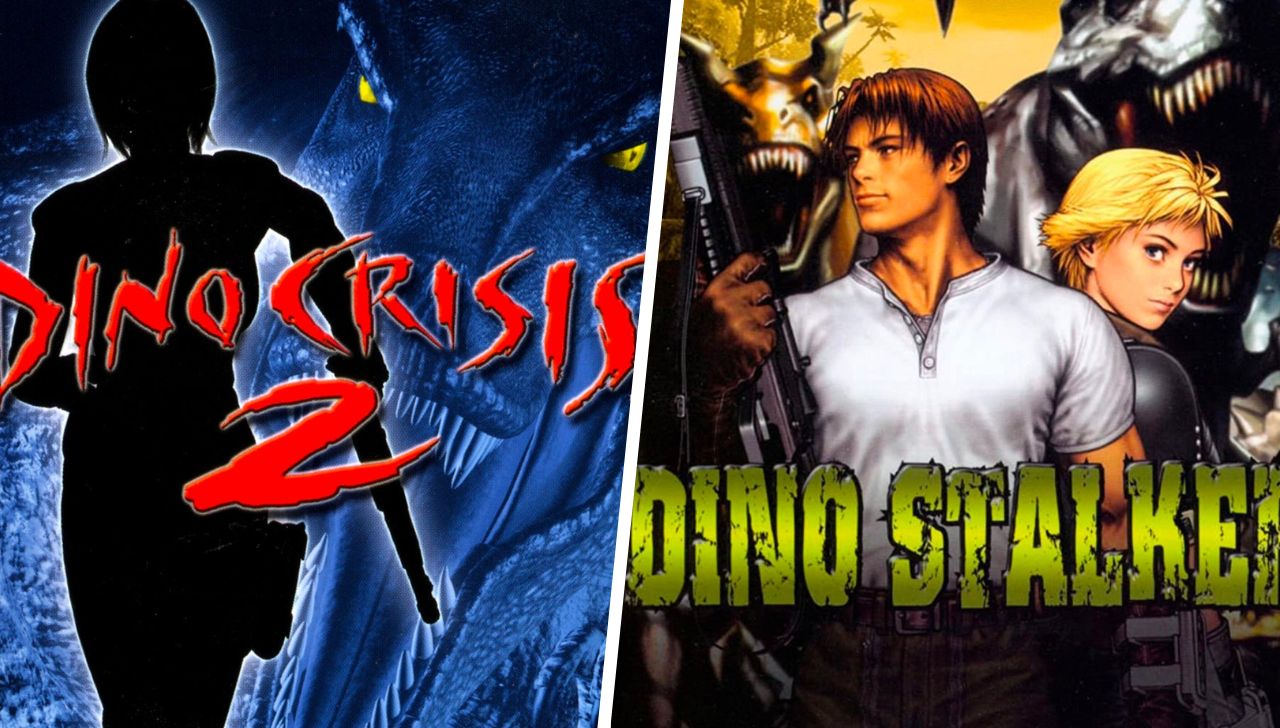
For over two decades, Capcom’s Dino Crisis has lived in the shadow of its more famous sibling, often dismissed with the reductive label “Resident Evil with dinosaurs”. While the comparison is understandable—both were born from the mind of legendary director Shinji Mikami and share a similar mechanical DNA—it misses the crucial distinction that made the original so special. Mikami himself didn’t call it “survival horror”; he branded it “panic horror”. This wasn’t about shambling, predictable zombies. This was about being hunted by fast, intelligent, and relentlessly violent predators in fully 3D environments, a design choice that fundamentally changed the nature of the threat and the player’s response to it.
The series stands as a fascinating, if ultimately tragic, case study of a franchise in search of an identity. It began with a brilliant and terrifying vision, pivoted into a celebrated action-arcade shooter, and ultimately crashed and burned in a spectacular, franchise-killing blaze of sci-fi absurdity. For those of us who were there on day one, inserting that original PlayStation disc and hearing those first unsettling roars, the journey has been a rollercoaster of elation and disappointment.
This report will serve as the definitive ranking of every game in the Dino Crisis series. It is an exhaustive analysis that will dissect each entry, from its core mechanics and narrative ambitions to its critical reception and lasting legacy. We will explore the series’ wild identity shifts, celebrate its brilliant highs, and perform a post-mortem on its devastating lows to finally answer the question: which prehistoric horror truly reigns supreme? This comprehensive look at Ranking the Dino Crisis games will settle the debate once and for all.
Read More : The Definitive Guide to PS1 Survival Horror Games, From Resident Evil to Silent Hill…
The Definitive Ranking
Before diving into the detailed analysis, it is useful to establish a factual baseline for the series. The following table provides a quick, objective overview of each game’s vital statistics, grounding the subsequent ranking in verifiable data and illustrating the franchise’s tumultuous evolution at a glance.
| Game Title | Initial Release Year | Original Platform(s) | Genre | Metacritic Score (Primary Platform) |
| Dino Crisis | 1999 | PlayStation, Dreamcast, Windows | Survival Horror / Panic Horror | 84/100 (PS) |
| Dino Crisis 2 | 2000 | PlayStation, Windows | Action–Adventure | 86/100 (PS) |
| Dino Stalker | 2002 | PlayStation 2 | Light Gun Shooter | 50/100 (PS2) |
| Dino Crisis 3 | 2003 | Xbox | Action–Adventure | 51/100 (Xbox) |
(Note: Dino Crisis: Dungeon in Chaos, a 2003 mobile game, and Dino Crisis 5th Anniversary, a 2004 Japanese compilation, are excluded from the primary ranking due to their obscurity, limited accessibility, and non-traditional nature. They represent historical footnotes rather than core entries in the series.)
#4. Dino Crisis 3 (2003)
If a franchise can have a single moment where it jumps the shark, Dino Crisis 3 strapped on a jetpack, aimed for Jupiter, and overshot its target by several galaxies. It is not just the worst game in the series; it is a game so fundamentally misguided and poorly executed that it single-handedly drove the entire intellectual property to extinction for two decades.
A Leap Too Far
Set in the year 2548, the game abandons the established lore and characters entirely. Players are thrust aboard the mysteriously reappeared colony ship Ozymandias, a setting that feels more like a rejected pitch for a Metroid or Dead Space title. The most egregious narrative sin is that the enemies are not even real dinosaurs. Instead, they are bizarre, genetically-engineered mutations created from stored dinosaur DNA, some of which can generate electricity or exist in a vacuum. This decision severed the game’s last thematic tie to its own name and the core concept of prehistoric horror that defined the series.
The Camera That Killed a Franchise
The catastrophic failure of Dino Crisis 3 can be traced to one central, unforgivable design flaw: its camera system. Contemporary reviews almost universally condemned it, with IGN famously dubbing it “The Worst Camera Ever”. The game’s design was a fatal contradiction. It gave the player a high-speed jetpack, encouraging fast, fluid, three-dimensional movement and aerial combat. Yet, the developers inexplicably chose to implement the static, fixed-camera perspectives of the old Resident Evil and Dino Crisis games.
The result was an unplayable nightmare. Players would constantly cross invisible boundaries in a room, causing the camera angle to abruptly flip 180 degrees, completely disorienting their movement and often sending them flying off platforms to their death. Combat became a frustrating exercise in firing blindly at off-screen enemies, whose presence was only indicated by damage indicators. This wasn’t a stylistic choice; it was a fundamentally broken mechanic that made the simple act of navigating a room an exercise in pure frustration.
The game was a critical and commercial disaster. It holds a Metacritic score of just 51/100, indicating “Mixed or Average” reviews that were, in reality, scathing. Critics lambasted the camera, the repetitive, shiny metallic environments that made it easy to get lost, and the shocking lack of enemy variety (featuring only three non-boss types).
For fans, the betrayal was even deeper. By making the game an exclusive for the original Xbox, Capcom alienated the core PlayStation fanbase that had supported the first two titles. This, combined with the abandonment of beloved characters like Regina and the nonsensical shift to “dinosaurs in space,” led to the game being widely regarded as the definitive “franchise killer”.
It wasn’t just a bad game; it was a game that showed a profound misunderstanding of, or perhaps contempt for, what its audience loved about the series. Its failure was the direct result of the series’ ongoing identity crisis reaching a terminal stage. Each entry had shifted genres, but this was a leap so far from the source material that it shattered the franchise’s DNA completely. The use of a horror-game camera system in a high-speed action game was the ultimate symptom of this confusion, proving the development team had lost the plot.
Read More : Parasite Eve’s Narrative: A Perfect Blend of Sci-Fi, Horror, and RPG
#3. Dino Stalker (2002)
Before the series was formally put on ice, Capcom released one last spin-off that has since faded into relative obscurity. Dino Stalker is a strange, experimental offshoot that ranks higher than Dino Crisis 3 not because it is a good game—it isn’t—but because its failure was that of a low-stakes side project rather than a mainline catastrophe.
Capcom’s Light Gun Gamble
Dino Stalker is not a traditional Dino Crisis game but is instead part of the Gun Survivor series, a line of light gun shooters that were themselves spin-offs of Resident Evil. This context is key to understanding its design. The plot is wonderfully bizarre, following a World War II fighter pilot named Mike Wired who, upon being shot down in 1943, is inexplicably transported to the dinosaur-infested future of Dino Crisis 2. It’s a non-canon, nonsensical premise that serves only to justify shooting dinosaurs from a first-person perspective.
Fighting the Controls, Not the Dinos
As a light gun game, Dino Stalker was intended to be played with the PlayStation 2’s GunCon accessory. However, this created a significant control problem. Using the GunCon required one hand for aiming and shooting, while the other was needed for movement on a D-pad or analog stick—a setup critics found physically tiring and awkward.
The alternative, playing with a standard DualShock controller, was even worse. Reviews from the time described the on-screen targeting reticle as overly sensitive and difficult to control, leading to a gameplay loop where players spent more time fighting the controls than the dinosaurs. GameSpot’s review bluntly called it a “frustrating mess of a game”. This core mechanical failure prevented the game from ever achieving the simple arcade fun it was aiming for.
The game was met with a critical thud, earning a “Mixed” Metacritic score of 50/100. It has been largely forgotten by the wider gaming community and is viewed by series fans as a subpar and entirely skippable entry. It was a misfired shot, an experiment that failed to find an audience or justify its existence. It sits above Dino Crisis 3 in this ranking simply because it was an unambitious side story that came and went, whereas its successor was a full-throated, high-budget effort that actively destroyed the franchise’s future.
#2. Dino Crisis 2 (2000)
If the original Dino Crisis was Alien, then Dino Crisis 2 was its Aliens—a sequel that traded claustrophobic horror for explosive, high-octane action. Released just one year after the original, it represented a radical and divisive pivot that, while critically successful, set the franchise on a path of constant reinvention that would ultimately prove to be its undoing.
From Horror to Hollywood Blockbuster
The story picks up with the return of series hero Regina, now partnered with a new protagonist, the tough-as-nails Dylan Morton. A catastrophic “Third Energy” accident has transported an entire research city back to the Cretaceous period, and their mission is to rescue survivors and retrieve the data. The plot is a whirlwind of time travel paradoxes, mysterious helmeted figures, and a shocking revelation about Dylan’s connection to the past, feeling less like a tense horror story and more like a summer action blockbuster.
The Thrill of the Hunt
Capcom completely overhauled the gameplay, throwing the “panic horror” manual out the window. The core of Dino Crisis 2 is its “Extinction Points” system. Players are awarded points for every dinosaur they kill, with bonuses for stringing together combos, counter-attacking, and finishing encounters without taking damage. These points act as currency at save terminals, allowing players to buy new weapons, ammunition, and health packs.
This single mechanic inverted the entire philosophy of the first game. Resource conservation was replaced with aggressive extermination. Hiding and running were replaced with running-and-gunning. The game actively encourages you to kill everything in sight, turning the tense corridors of the original into a thrilling, blood-soaked arcade shooting gallery. With a wider variety of weapons, more diverse environments, and bombastic set-pieces—like an on-rails chase sequence fending off a T-Rex—the game was pure, unadulterated fun.
The Great Debate
Dino Crisis 2 was a critical darling, earning an impressive Metacritic score of 86/100. Reviewers at the time lauded it for stepping out of the shadow of Resident Evil and forging its own unique, action-packed identity. It was praised for its beautiful pre-rendered backgrounds, smooth gameplay, and satisfying combat loop.
However, this critical success created a deep schism within the fanbase that persists to this day, a key point in any discussion about Ranking the Dino Crisis games. Many players adore the game for its sheer replayability and exhilarating action, considering it the pinnacle of the series. Yet, an equally vocal contingent of survival horror purists felt betrayed by the abandonment of the original’s tension and fear. For them, the sequel, while fun, was not a true Dino Crisis experience.
This pivot, though successful on its own terms, created a paradox. The first game sold well (2.4 million copies) but was often labeled a clone. The sequel sold less (1.2 million copies) but was praised for its originality. The likely lesson Capcom took from this was that radical change was creatively and critically rewarding. This positive reinforcement for a complete genre shift almost certainly emboldened the publisher to greenlight the even more radical, and ultimately disastrous, pitch for Dino Crisis 3. In this way, the very success of the second game is inextricably linked to the eventual failure of the third.
#1. Dino Crisis (1999)
There can be no other choice for the top spot. The original Dino Crisis is not just the best game in the series; it is a landmark title in the history of survival horror. It took the foundation built by Resident Evil and evolved it in a meaningful, terrifying way, delivering a masterpiece of tension, atmosphere, and “panic horror” that its sequels never managed to recapture.
Panic on Ibis Island
The setup is a masterclass in B-movie efficiency: a special operations team led by the iconic, red-haired agent Regina is sent to the remote Ibis Island to investigate a research facility and apprehend a rogue scientist, Dr. Kirk. They arrive to find the facility in ruins, littered with mangled corpses, and soon discover the cause: a “Third Energy” experiment has torn a hole in spacetime, unleashing prehistoric predators into the present day. The story is straightforward, compelling, and provides the perfect framework for the horror that follows.
The Birth of Panic Horror
What made Dino Crisis so revolutionary was how it leveraged technology to amplify fear. Unlike the pre-rendered backgrounds of Resident Evil, the game used a full 3D engine with real-time environments. This was not merely a graphical upgrade; it was a fundamental gameplay innovation. It allowed for dynamic camera work and, most importantly, more dynamic enemies.
The dinosaurs in Dino Crisis were a world away from the slow, shuffling zombies players were used to. Velociraptors were fast, intelligent, and could burst through doors or leap over fences to pursue you from one room to the next, shattering the “safe room” convention of the genre. This created a persistent, relentless sense of being hunted that was genuinely terrifying.
The game further amplified this with brilliant mechanics like the bleeding system, where sustaining a deep wound would leave a trail of blood, attracting more dinosaurs and inducing a state of pure panic as you fumbled to apply a hemostat. The inclusion of a choice-and-consequence system, where players had to side with either the pragmatic Rick or the ruthless Gale at key moments, added layers of replayability and narrative tension.
An Enduring Classic
The game was a massive commercial and critical success, selling over 2.4 million copies on the PlayStation alone and earning a Metacritic score of 84/100. While some contemporary reviews pointed out flaws like tedious puzzles and somewhat repetitive environments, these were seen as minor blemishes on an otherwise groundbreaking experience. Today, it is revered as a cult classic, beloved by fans for its intense atmosphere and for giving the genre one of its most capable and cool-headed heroines in Regina. It remains the definitive prehistoric horror game.
Dino Crisis takes the crown because it had a singular, powerful vision and executed it with near-perfect precision. It wasn’t just “Resident Evil with dinosaurs”; it was the successful evolution of the survival horror formula and the birth of “panic horror,” creating a unique and unforgettable experience that remains the series’ unmatched apex.
Legacy and the Unending Hope for a Remake
The extinction of the Dino Crisis franchise was not a single event but a slow decline. The genre whiplash between the first two games splintered the fan base, and the unmitigated disaster of Dino Crisis 3 was the final nail in the coffin. For nearly two decades, the series lay dormant, kept alive only by the passionate, persistent cries of its cult following.
The Fan Cryogenics – A Cult Classic Reborn Online
In the long years of Capcom’s silence, the fan community refused to let the series die. Forums, social media groups, and petitions have consistently buzzed with calls for a sequel or, more recently, a full remake in the style of Capcom’s successful Resident Evil reimaginings. This passion has even manifested in numerous fan-made remake projects, built in modern engines like Unreal, which serve as a constant, tangible reminder of the demand that Capcom has yet to meet.
A Glimmer of Hope? The GOG Re-release
After years of inactivity, a surprising development occurred in January 2025: Capcom, in partnership with GOG.com, officially re-released enhanced PC versions of both Dino Crisis and Dino Crisis 2. These were not simple ports; they included modern enhancements like Windows 10/11 compatibility, 4K resolution, modern controller support, and various stability fixes.
This move is far more significant than mere fan service. It represents a low-risk, data-driven market viability test for a potential Dino Crisis remake. Capcom has seen the monumental success of its Resident Evil remakes, but Dino Crisis presents a unique problem: which version do you remake? The tense horror of the original or the arcade action of the sequel? A full-scale remake is a multi-million dollar gamble.
By re-releasing the originals, Capcom can track sales data and community engagement (explicitly encouraged by GOG’s “Dreamlist” tool) to get a definitive, market-based answer to that question. This modern business strategy effectively places the franchise’s future directly in the hands of consumers, making the performance of these GOG releases a critical litmus test for the series’ revival.
The Enduring Bite of Panic Horror
The history of the Dino Crisis franchise is a tumultuous one, defined by brilliant innovation, radical reinvention, and catastrophic miscalculation. The final ranking is clear: the original Dino Crisis stands alone at the top, a masterwork of “panic horror” that delivered on its premise with terrifying precision. Dino Crisis 2 follows as a superbly crafted action game that, while excellent, began the series’ identity crisis. Finally, Dino Stalker and Dino Crisis 3 represent the franchise’s nadir, a forgettable spin-off and a disastrous mainline entry that killed the series for a generation.
The series’ downfall was its inability to commit to a single vision. Yet, the core concept of the original—claustrophobic horror against intelligent, prehistoric beasts—remains as potent today as it was in 1999. With the recent GOG re-releases, there is a flicker of hope on the horizon. If Capcom chooses to resurrect this beloved franchise, the path to success lies not in further experimentation, but in returning to the terrifying roots of “panic horror” that made the original a timeless legend. Discover fascinating game insights in Revan’s latest articles! Stay updated daily by following Geminvo on Instagram, X (Twitter), Facebook, YouTube & TikTok.
Summary of Ranking the Dino Crisis games
- Final Ranking: The definitive ranking of the Dino Crisis series is:
- Dino Crisis (1999)
- Dino Crisis 2 (2000)
- Dino Stalker (2002)
- Dino Crisis 3 (2003)
- Dino Crisis (1999) is the Apex Predator: The original game is ranked number one due to its clear, powerful vision of “panic horror,” which successfully evolved the survival horror genre with its full 3D engine and intelligent, persistent dinosaur enemies.
- Dino Crisis 2 (2000) was a Divisive Masterpiece: The sequel is highly praised for its fun, arcade-style action and combo-based “Extinction Points” system. However, its complete abandonment of the original’s horror elements created a deep divide in the fanbase and set a precedent for drastic genre shifts.
- Dino Crisis 3 (2003) was the Franchise Killer: The third mainline game is ranked last due to its fundamentally broken camera system, nonsensical “dinosaurs in space” premise, and alienation of the core fanbase by being an Xbox exclusive. It is widely considered the reason the franchise went dormant.
- Dino Stalker (2002) was a Forgettable Experiment: This light gun shooter spin-off was a commercial and critical failure, primarily due to awkward control schemes. It is a largely forgotten footnote in the series’ history.
- A Legacy of Identity Crisis: The series’ ultimate downfall was its constant and chaotic reinvention. The critical success of Dino Crisis 2‘s genre pivot likely encouraged the disastrous experimentation seen in Dino Crisis 3.
- Hope for a Remake: Decades of persistent fan demand, coupled with the recent enhanced PC re-releases of the first two games on GOG.com, suggest that Capcom is testing the market for a potential Dino Crisis remake. The sales and reception of these re-releases will likely determine the franchise’s future.