
# The Rise of Character Action: How Devil May Cry Changed Everything
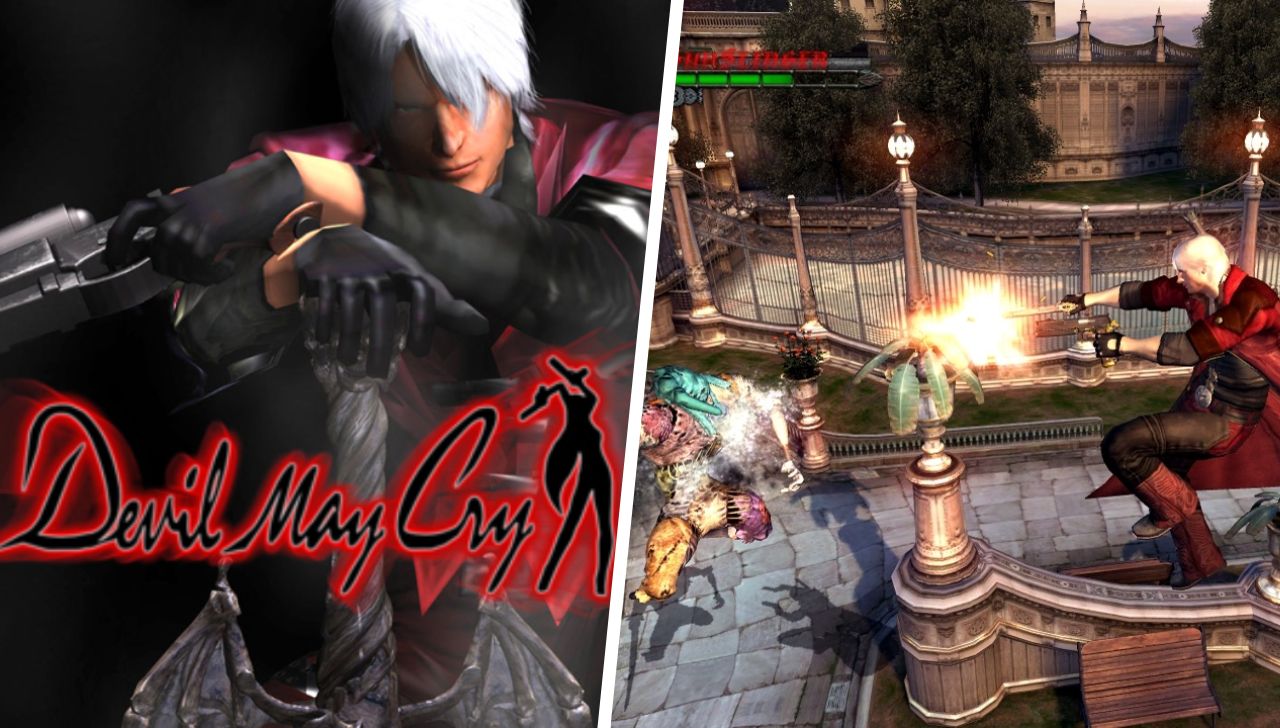
Geminvo – The screen explodes in a kaleidoscope of violence and grace. Your character, a blur of motion, launches a demon into the air with a massive sword, holds it there with a torrent of bullets from twin pistols, teleports upward to slam it back to the ground, and finishes with a flourish as the music swells to a roaring crescendo. The announcer’s voice booms: “Smokin’ Sexy Style!” That feeling—that perfect fusion of control, creativity, and pure, unadulterated coolness—is the heart of the character action game.
But what really separates this experience from just clearing a room of enemies in any other action title? The answer is style. The term “character action” itself is notoriously vague, a label that has been debated on forums and in comment sections for years. It’s less a rigid genre definition and more a design philosophy. It’s a philosophy centered on deep mechanical mastery, boundless player expression, and the fundamental belief that the goal isn’t just to win, but to look incredible while doing it.
While the action game history is filled with innovators, one game stands as the undisputed catalyst for this entire subgenre. Capcom’s 2001 masterpiece, Devil May Cry, didn’t just iterate on existing ideas; it was a happy accident, a creative mutation that provided the foundational DNA for the character action games we know and love today.
Read More : Review God of War Chains of Olympus (2008) – A Look Back at Kratos’s Masterful Handheld Debut
A World Before Dante: The Clunky, Experimental Age of 3D Action
To understand the seismic DMC influence, one must first look at the landscape it shattered. The late 1990s were a “Wild West” for 3D action games. Developers were still grappling with how to make combat feel fluid and intuitive in a three-dimensional space. Before Devil May Cry, the genre was largely populated by what many remember as “clunky beat-em-ups”. In this primordial soup of design, two distinct evolutionary paths were emerging.
The Two Divergent Paths
The first path was one of slow, methodical combat, often blended with RPG elements. Games like the King’s Field series were pioneers in this space, demanding careful positioning and deliberate attacks. This design philosophy would eventually lead to the modern Souls-like genre, where survival and strategy trump flashy combos. These games were the distant ancestors of titles that reward patience and punish recklessness.
The second path was a more direct translation of 2D brawlers into 3D. Titles like Dynasty Warriors 2 threw hordes of enemies at the player, focusing on wide, sweeping attacks for crowd control. While empowering, these games often lacked the deep, technical combat systems for engaging one-on-one duels, prioritizing quantity over the quality of individual encounters.
Interestingly, these two schools of thought, which today manifest as the often-contrasted character action games and Souls-likes, share a common ancestor. They represent two different answers to the same fundamental question posed in the late 90s: “What should 3D combat feel like?” One chose deliberation, the other chose spectacle.
The Foundational Innovation
Both of these paths, and indeed the entire future of 3D melee combat, were made possible by one groundbreaking mechanic: the Z-targeting system from 1998’s The Legend of Zelda: Ocarina of Time. This lock-on feature solved the critical problem of spatial awareness and aiming in a 3D environment. It allowed players to focus on a single enemy, circle them, and execute precise attacks. Without Z-targeting, the intricate, stylish combat of a game like Devil May Cry would have been impossible.
Yet, even with this foundation, a crucial piece was missing. The world lacked a game that could merge the technical depth and single-enemy focus of a fighting game with the freedom of movement and exploration of a 3D adventure. The stage was set for a revolution.
Read More :10 Underrated PS3 Hidden Gems You’ve Never Played
An Angel’s Trigger: The Accidental Revolution Inside Capcom
The birth of the character action game wasn’t the result of a focus-tested corporate strategy. It was an accident, a “failed” project that was too brilliant to discard. The story begins with a mandate for a sequel: Resident Evil 4.
Director Hideki Kamiya, under the guidance of legendary producer Shinji Mikami, was tasked with creating a fresh take on Capcom‘s flagship survival horror series. Kamiya’s vision, however, was for a “very cool and stylized action-adventure game”. His protagonist, initially named Tony, was conceived as an “invincible man” with superhuman abilities derived from biotechnology—a concept fundamentally at odds with the vulnerability and tension of Resident Evil. As development progressed, the gameplay strayed further from its horror roots, opting for a dynamic camera system and fast-paced combat.
It was here that Shinji Mikami made a pivotal, genre-defining decision. Recognizing that Kamiya’s ideas were too radical for Resident Evil but too compelling to cancel, he convinced the team to rebrand the project as a completely new intellectual property. This single act of creative trust allowed Kamiya’s vision to flourish, unconstrained by franchise expectations. Tony became the demon hunter Dante, and the world of stylish action was born.
This decision makes perfect sense when viewed through the lens of Hideki Kamiya’s personal design philosophy. He sees games not as disposable products, but as “works of art” that should reflect the unique vision of their creator. He has spoken about wanting to create games that express the “unique sensitivities as Japanese creators,” consciously designing Dante as an agile, charismatic hero in contrast to the “muscly, he’s huge, he’s bald” Western protagonists like Kratos that were becoming popular. For Kamiya, forcing his vision into the Resident Evil mold would have been a compromise he couldn’t make, an act akin to “killing his soul”.
Adding to this perfect storm of creativity was a serendipitous bug discovered during the development of another Capcom title, Onimusha. A glitch was found that allowed players to keep enemies suspended in the air with repeated strikes. Instead of patching it out, the team saw its potential. This bug became the direct inspiration for Devil May Cry‘s iconic aerial combat, a cornerstone of its combo system. The genre’s birth was thus a product of artistic integrity, managerial wisdom, and a happy accident.
The Anatomy of Cool: Dissecting the Devil’s Gameplay
What exactly made Devil May Cry‘s gameplay so revolutionary? It was a combination of smart control mapping, a deep system of rewards, and a core infused with the DNA of a completely different genre.
The Holy Trinity: Sword, Guns, and Style
The most immediate innovation was assigning melee and ranged attacks to separate buttons. This seemingly simple choice was transformative. It allowed players to seamlessly weave sword slashes and gunfire into a single, fluid ballet of destruction. Guns weren’t just a secondary weapon; they were a combo-extension tool, a way to juggle enemies in the air, maintain pressure, and look effortlessly cool while doing it. Kamiya’s team had successfully translated the core appeal of 2D brawlers and hack-and-slash games into a responsive, three-dimensional system that felt incredible to control.
The SSS-Rank Philosophy: Rewarding Artistry Over Victory
The game’s true genius, however, lies in its most iconic mechanic: the Style Meter. This real-time grading system, which ranks player performance from “Dull” to “Stylish,” fundamentally reoriented the player’s goals. It wasn’t enough to simply defeat the demons; the game challenged you to do it with creativity, variety, and precision.
This mechanic created a profound psychological shift. It actively discouraged spamming the same moves and punished taking damage, pushing players to experiment with Dante’s entire arsenal and master defensive timing. Every combat encounter became a performance, a chance to create a spectacular sequence of moves.
The Style Meter is more than a score; it’s a communication tool that teaches the game’s core philosophy without a single line of tutorial text. It redefines “success” from a simple binary of living or dying to a rich spectrum of artistic expression. Later games in the series would enhance this with a dynamic audio-visual feedback loop, where the background music intensifies and the visuals flare as your rank climbs, making an SSS-rank a moment of pure sensory euphoria.
Fighting Game DNA
This new layer of technical depth was pulled directly from the 2D fighting games that Capcom was famous for. Core concepts like launchers (Dante’s “High Time” uppercut), aerial juggling, and intricate combo strings were brilliantly adapted for a single-player, 3D action context. This gave the game an incredibly high skill ceiling that appealed to a hardcore audience that valued mechanical mastery, establishing a key trait for all future character action games.
The Echoes of Hellfire: A Genre Forged in DMC’s Image
Devil May Cry didn’t just earn critical acclaim; it laid down a blueprint for a new type of action game, and the industry took notice. Its influence created a gravitational pull, and soon a new wave of titles emerged, each entering into a “conversation” with Capcom‘s trailblazer.
The New Titans: Immediate Successors and Rivals
The first major response came from Sony’s Santa Monica Studio with God of War (2005). It was a distinctly “Western take on the Devil May Cry formula,” adopting the combo-heavy combat and orb-based upgrade system but wrapping it in a grittier, Greek mythology aesthetic. While sharing a similar foundation, God of War was generally more accessible, focusing on brutal spectacle over the highly technical execution demanded by DMC. It successfully translated the formula for a mainstream audience.
In 2004, a classic franchise was reborn with Ninja Gaiden. This reboot took the DMC framework and skewed it in a different direction: brutal, unforgiving difficulty. It prioritized defensive mastery and lightning-fast enemy aggression, demanding precision and tactical thinking over the freeform offensive creativity of its rival.
These two titles, alongside Hideki Kamiya’s own spiritual successor, Bayonetta, would come to be known as the genre’s “Big Three.” They formed a spectrum of design: Devil May Cry represented pure player expression, Ninja Gaiden stood for extreme enemy challenge, and Bayonetta was seen by many as the perfect synthesis of the two. This dialogue between developers—imitating, iterating, and differentiating—is how the genre was truly solidified.
The Wider Shockwave
The DMC influence spread far and wide, creating a shockwave that touched numerous other games.
- The Darksiders series began as a clear homage, blending Zelda-like exploration with DMC-style combat.
- PlatinumGames’ Metal Gear Rising: Revengeance took the high-speed swordplay to its logical extreme.
- The Nier franchise, especially Nier: Automata, integrated the fast-paced, stylish combat into its unique RPG framework.
- The formula was so potent that even movie tie-in games like Ghost Rider and The Nightmare Before Christmas: Oogie’s Revenge were built as simplified DMC clones, providing a fun and effective gameplay loop.
The Devil’s Enduring Legacy: Why Style Still Matters
The genre that Devil May Cry sparked has had its own distinct life cycle. Fans often point to a “Golden Age” from roughly 2005 to 2009, followed by a “Dark Age” where quality dipped and the market was saturated with clones, and finally, a modern “Rebirth Age” heralded by the triumphant return of titles like Devil May Cry 5.
Throughout it all, the series has remained the benchmark. Even two decades later, Devil May Cry is the gold standard against which new action games are often judged—sometimes to a fault. Fans and critics alike often evaluate games based on “how much it’s like DMC,” a testament to its unshakable position as the genre’s platonic ideal.
The very term “character action game” has a legacy rooted in this era. Originally a generic label for any game where you controlled a character, its modern, specific meaning was not coined by journalists but popularized by player communities on forums like GameFAQs and NeoGAF. Players needed a way to describe this new, specific, stylish action experience, and the term stuck. This grassroots origin helps explain why its definition remains fluid and is still a topic of passionate debate.
Ultimately, the legacy of Devil May Cry is monumental. It wasn’t just another great game; it was a paradigm shift in design. It taught the industry that how a player fights can be more engaging than what they are fighting. It proved that giving players a deep toolbox for self-expression and a system that rewards their artistry could create an experience that is infinitely replayable and deeply personal. The devil’s work is never done, and his influence lives on in every game that dares to believe that playing with style is the entire point.
Summary of How Devil May Cry Changed Everything
- The term “Character Action Game,” once a generic label, was redefined by Devil May Cry (2001) and now refers to a specific subgenre focused on deep, stylish, high-skill-ceiling combat.
- Before DMC, 3D action games were experimental, generally following either a slow, methodical path (like King’s Field) or a wide, shallow brawler path (like Dynasty Warriors).
- Devil May Cry was born accidentally from a “failed” Resident Evil 4 prototype, greenlit as a new IP because director Hideki Kamiya’s vision for a “cool and stylized” game was incompatible with survival horror.
- Its core innovations were the seamless integration of melee and ranged combat and, most importantly, the Style Meter, which shifted the player’s goal from mere survival to achieving victory with creative flair and technical perfection.
- DMC heavily incorporated DNA from 2D fighting games, introducing mechanics like launchers and air juggling to a 3D single-player space, creating unprecedented mechanical depth.
- The game established a new “gold standard,” directly influencing major franchises like the original God of War trilogy, the rebooted Ninja Gaiden, and Hideki Kamiya’s own spiritual successor, Bayonetta.
- The legacy of Devil May Cry is the establishment of expressive, player-driven combat as a viable and celebrated genre, proving that the artistry of play can be as compelling as the narrative or exploration.